
Two Weeks into Iran’s Protest Wave: A New Phase

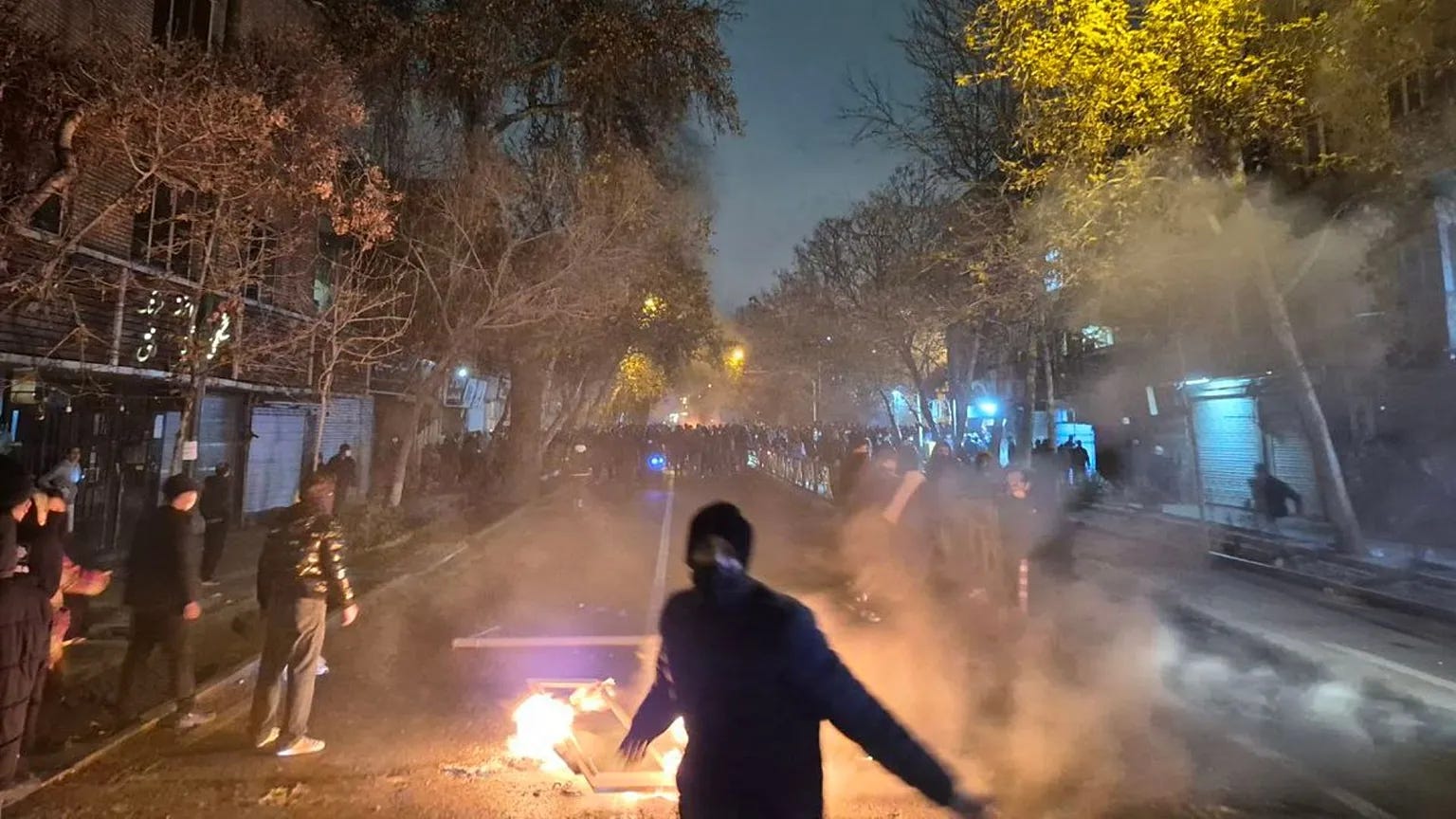
Anti-regime protests in Iran have now lasted for two weeks, and in recent days they appear to have entered a new phase. In my previous post, published on the fifth day, I reflected on the initial geography of unrest and compared it with Iran’s earlier protest waves.
The current episode began with shopkeepers in Tehran’s Grand Bazaar, where slogans supporting the Pahlavi monarchy were also heard. Over the following days, protests spread primarily to Persian-speaking districts as well as Lor and Caspian areas. Meanwhile, Kurdish, Azeri, Baluchi, Arab, and Sunni-majority districts were largely absent or only weakly represented during the initial phase—consistent with their limited sympathy for monarchist slogans and with longer-standing political tensions between monarchist currents and marginalized ethnolinguistic constituencies.
Some commentators quickly framed the protests as driven mainly by economic deprivation. And indeed, from Lor districts, protests did spread into deprived Kurdish areas of Ilam, such as Abdanan, Ilam, and Malekshahi. But the economic explanation alone cannot account for the early geography of the unrest. Other deeply impoverished regions—most notably in Sistan and Baluchestan—did not join the protests in the initial phase. What mattered, in addition to deprivation, was ethnic identity as well as proximity to early protest sites. As scholars of revolutions and social movements have long emphasized, once a contentious episode begins, diffusion dynamics can accelerate participation beyond what structural conditions alone would predict—through inspiration, shared emotions, and the rapid spread of information.
A second trigger: violence and moral outrage
A key turning point came with reports of security forces attacking a hospital in Ilam (and separately in Tehran). This incident appears to have served as a second trigger, creating moral outrage, generating condemnation from civil society actors, and amplifying calls for solidarity—particularly within Kurdish regions.
In this context, Kurdish parties called for strikes in Kurdish provinces. At the same time, as pro-monarchy slogans continued to circulate in certain areas, Reza Pahlavi—the head of the monarchist camp—called for nationwide protests. In the days that followed, demonstrations expanded both geographically (into more Kurdish and Azeri districts) and in scale, with especially significant growth in participation in Tehran, Mashhad, and other major cities.
Videos from Thursday and Friday suggested crowds of extraordinary size in Tehran—possibly among the largest since the 2009 Green Movement—despite escalating threats by Islamic Republic officials.
Toward a Crackdown
During the first phase, repression appeared relatively restrained, more comparable to the 2017–18 protests than to the full-scale crackdown of 2019 (with exceptions such as the Ilam incident). Reformist President Masoud Pezeshkian also initially called for restraint and urged officials to listen to protesters’ grievances. This early restraint—particularly in large cities—may have emboldened broader participation and contributed to the surge in turnout.
Over the last two days, however, the government’s calculus appears to have shifted. The regime may not have anticipated such large crowds, especially in major cities. The internet has now been shut down for two days, a measure that often signals preparation for intensified repression. The most notorious precedent remains November 2019, when internet shutdown coincided with a lethal crackdown that killed at least several hundred protesters in a single week.
Early reports emerging under blackout conditions now suggest that the state has moved toward a bloody crackdown, with rising casualties and expanded use of force in multiple locations. This time, however, protests have also been larger and more geographically widespread, raising the stakes for both protesters and the regime.
The feedback loop: why size and diffusion matter
The scale of participation matters as much as geographic spread. Social movement scholarship emphasizes the role of participation feedback loops: as more people join, perceptions of efficacy expand, fear declines, and the idea that the movement can defeat the government becomes psychologically plausible. That, in turn, encourages further participation.
The size of crowds in recent days—despite threats and repression—suggests that this protest wave may be entering a phase that earlier anti-regime episodes since 2017 did not fully reach.
Tactics and Escalation
Protesters have deployed a wide range of tactics—from mass nonviolent demonstrations to stone-throwing, arson (including the burning of buildings), and direct confrontations with security forces. In some incidents, protesters reportedly beat—and in a few cases killed—security personnel. Pro-protester accounts have also circulated videos claiming the use of firearms in clashes with security forces. Even so, protester violence remains far smaller in scale and lethality than the violence deployed by state security forces. Importantly, peaceful mass demonstrations remain the dominant tactic overall; given their size, this is the form of participation the vast majority of protesters have engaged in.
As is often the case in Iran, protest waves frequently begin with largely peaceful demonstrations, but tactics escalate as security forces resort to violence against protesters. Escalation is often relational. Protester violence frequently emerges in response to violence by state security forces—and in many cases as self-defense. Lethal force and highly visible brutality can generate moral outrage and push segments of the movement toward retaliatory tactics. This is an explanatory point, not a justificatory one: the violence is not symmetrical, and responsibility for mass violence rests overwhelmingly with the state, which holds vastly greater coercive capacity and the legal-institutional machinery to repress at scale.
Whether armed and violent tactics remain marginal or grow more central will matter greatly for the movement’s trajectory and for how the regime expands repression. A large body of social scientific research suggests that as violence escalates within contentious episodes, the prospects for a peaceful and democratic transition tend to diminish.
Slogans and Competing Visions
In terms of slogans, the movement reflects a plurality of themes.
First, the most common slogans are explicitly anti-regime. They directly target the Islamic Republic’s leadership—especially Ali Khamenei—and leave little ambiguity about protesters’ demand for the downfall of the regime.
Second, a major theme centers on freedom (azadi) and rights. Chants such as “Azadi” express opposition not only to political repression but also to the dense web of restrictions that regulate everyday social life in Iran.
Third, pro-monarchy slogans represent another highly visible theme, particularly in Persian-speaking, Lor, and Caspian districts. Within Persian-speaking digital spaces, content supportive of the monarchy has also been especially prominent. Reports of similar slogans in marginalized ethnic regions exist, but they remain rare, limited in scale, or difficult to verify.
Fourth, and at a much lower frequency, some regions have displayed explicit anti-monarchy counter-slogans, revealing sharp fractures within the opposition over the meaning of the post–Islamic Republic alternative. For example:
In Azeri areas: “Azerbaijan is honor; Pahlavi has no honor.”
In Kurdish districts: “Kurdistan, Kurdistan—the graveyard of fascists.”
Fifth, the protests also include a strong theme of Iran-first nationalism, often expressed through criticism of the regime’s foreign policy priorities. The slogan “Na Ghaza, Na Lobnan, Janam fadaye Iran” (“Neither Gaza nor Lebanon; my life for Iran”) captures a widespread grievance that the Islamic Republic has prioritized regional interventions and geopolitical ambition over domestic welfare and economic stability. This framing also overlaps with the monarchist narrative, which presents the Pahlavi alternative as a project of economic growth and “normal” statehood—reducing ideological entanglements abroad in favor of domestic stability and prosperity.
Together, these themes underscore the movement’s breadth. At the same time, they reflect what scholars of revolutionary episodes describe as a negative coalition—a concept that is descriptive rather than evaluative. It refers to a coalition held together by broad agreement on what must be removed (the Islamic Republic), even as its participating currents disagree—sometimes sharply—over what political project should replace it. This structure is not unusual: the vast majority of urban revolutionary uprisings over the past decade have similarly been powered by negative coalitions, where unity in opposition precedes (and often complicates) consensus in transition.
The Appeal of Monarchism
The appeal of the monarchy has multiple roots. One is a broader global trend toward ethnonationalist and far-right imaginaries. Another is the rise of nostalgia among some Iranians for the Pahlavi era, increasingly remembered—accurately or not—as a period of stronger state capacity, social stability, and economic normalcy. This nostalgia is also tied to memories of comparatively broader social freedoms under the monarchy: even if political rights were sharply limited, everyday life was seen as less regulated, with more latitude in lifestyle—such as dress, gender mixing, and alcohol consumption. Reza Pahlavi himself has repeatedly endorsed liberal-democratic principles. Yet in practice, parts of the monarchist camp have developed an increasingly intolerant political culture, often using vile language, sexual slurs, and coercive messaging against rival opposition groups. As a result, many non-monarchist constituencies view monarchism not as a democratic alternative, but as an authoritarian project in waiting.
A second driver is desperation. For many Iranians, the urgency of removing the Islamic Republic has grown to the point where “any alternative” appears preferable to the status quo. The monarchy camp benefits from offering a simple and emotionally legible formula: one name, one symbol, and a familiar past—standing in sharp contrast to the fragmentation of republican and minority-rights currents.
Monarchists have also accumulated a clear media advantage. Over the past several years, monarchist outlets and networks have developed an outsized presence in diaspora media ecosystems—amplified in part by foreign-linked platforms and resources. Sustained media production and propaganda have not only elevated monarchism as a brand, but also marginalized rival opposition currents, helping frame the monarchy as the only coherent alternative to the Islamic Republic.
Despite these advantages, monarchists have generally lacked the capacity to initiate protest episodes inside Iran. Reza Pahlavi has repeatedly called for uprisings, yet these appeals have rarely translated into mobilization on the ground. The most recent example came during Israel’s attack on Iran, when he endorsed the assault and called on residents of Tehran to rise—calls that did not result in visible protest. In the current episode, by contrast, Pahlavi intervened after the protest wave had already begun, suggesting that monarchist influence operates more through attempting to shape and capture existing momentum than through initiating contentious episodes.
Finally, diffusion itself has become a driver. Among segments of the urban middle class, monarchism increasingly appears as the socially dominant trend, and some may adopt it partly to avoid being seen as out of step with where public sentiment seems to be moving. This kind of bandwagon dynamic is familiar in Iranian politics. It resembles the late-stage momentum sometimes observed in reformist presidential campaigns—for example in Hassan Rouhani’s campaigns—when particular slogans and frames suddenly become pervasive and socially contagious. Many who now gravitate toward monarchism likely supported reformist projects in earlier years, but have become increasingly disillusioned with reformism over the past decade.Concerns also remain about the political vision embedded in Reza Pahlavi’s transition proposal, which suggests concentrating executive, legislative, and judicial powers for three years while overseeing a referendum on monarchy versus republic and subsequent constituent assembly elections. The more likely prospect is that this transition blueprint would reproduce yet another hybrid regime—an electoral authoritarian order with a different geopolitical alignment (closer to the U.S. and Israel rather than Russia and China) and a more explicit ethnonationalist discourse replacing Islamist ideology.
A shift in cultural tone: masculinity, nationalism, and militarized aesthetics
In correspondence with the ethnonationalist turn, the protest culture and the digital content surrounding it has taken on a strongly masculine tone—especially when compared with the 2022 uprising.
In 2022, women’s rights were central; women were highly visible in protest footage; and murdered women became icons of the movement. In the current wave, by contrast, much of the viral content consists of footage of Mohammad Reza Pahlavi and Reza Pahlavi, alongside AI-generated imagery celebrating ancient Persian grandeur—Achaemenid kings, warriors, Persepolis symbolism, and nationalist militarized aesthetics.
Content circulated from Lor regions also includes the famous Lori song “Daye Daye, vaghte janga” (“Mother, mother, it’s time for war”), a wartime anthem popular during the Iran–Iraq war when many Lor recruits were deployed to the front. In this context, the song is repurposed as an epic call to struggle against the Islamic Republic.
What comes next
The road ahead remains deeply uncertain. The Islamic Republic is unlikely to back down in the face of escalating mobilization, while protesters appear increasingly committed to regime change. Some have suggested the possibility of intra-elite reshuffling in favor of more reformist factions, yet there is limited evidence of such developments, and it is unclear whether they would be politically consequential.
Meanwhile, the possibility of American or Israeli military action introduces another destabilizing factor that could dramatically reshape the contentious field inside Iran. Military escalation could trigger intensified repression, deepen instability, and—in the worst case—push the country toward outcomes seen elsewhere in the region: protracted conflict, civil war, or partial state collapse, as in Syria, Libya, and Iraq.
This episode has already altered Iran’s political atmosphere. Whether it culminates in a revolutionary situation, state repression, opposition fragmentation, or prolonged stalemate remains uncertain.
Note: I am writing this amid an ongoing internet blackout in Iran, which has restricted real-time reporting and slowed the flow of new developments. The situation is unfolding rapidly. I am following the news closely and will write again in the coming days and weeks.